Advertorial
5 Reasons Why Women Refuse To Leave The House Without This Small Alarm
Because in the moment it actually matters, hoping someone hears you isn't a plan.
The World Health Organization's own published estimate is that roughly one in three women will experience physical or sexual violence in their lifetime. Not a headline statistic - a number that means most of the small, specific moments below aren't hypothetical for the person reading this.
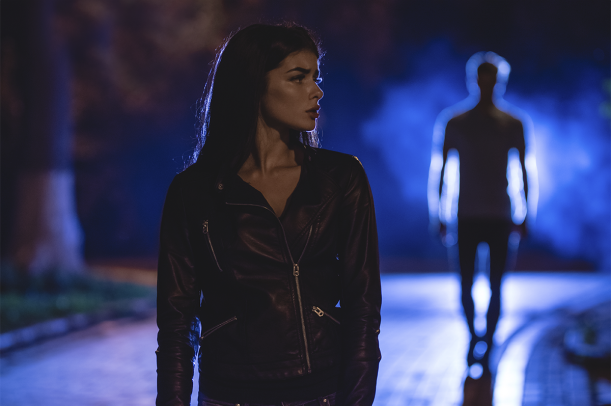
It's the vague, hard-to-name version of that risk that ends up shaping how people plan for it - not a specific threat, just an awareness that the plan for "what if" usually isn't a plan at all.
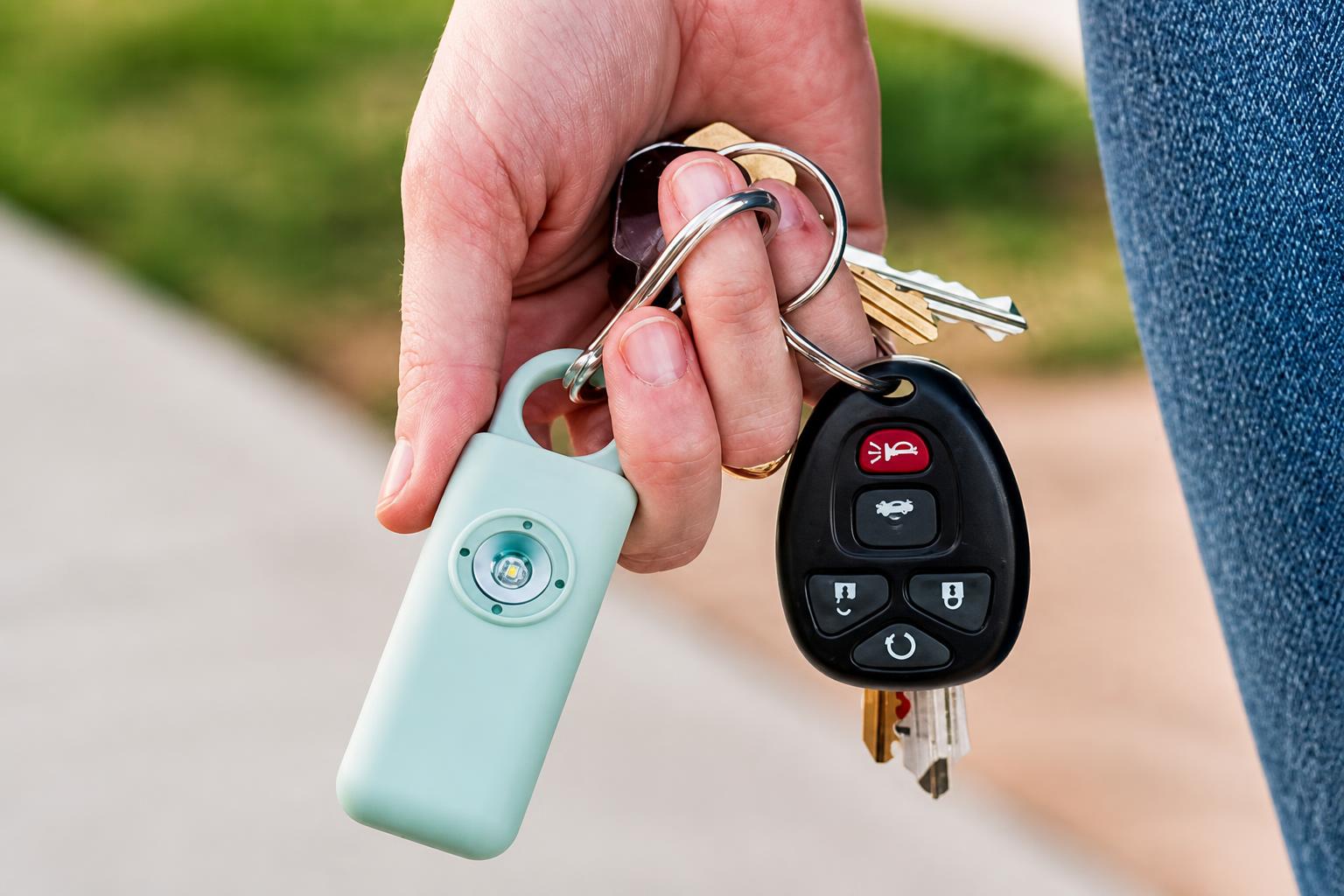
This is what an actual backup plan looks like: not an app, not a mindset - a small pull-pin device that clips right onto the keys you're already holding every time you leave the house.
The problem isn't that women don't think about safety. It's that most of what's supposed to help - a phone, an app, a can of spray in the bottom of a bag - depends on conditions you don't control: a charged battery, a steady hand, enough time to aim. Here's what five of those specific moments actually look like, and what changes when the plan doesn't depend on any of that.
What Is Hootie?
Hootie is a small, keychain-sized personal alarm - the closest thing to carrying your own alarm system with you everywhere you go, without an app, a subscription, or anything to charge overnight.
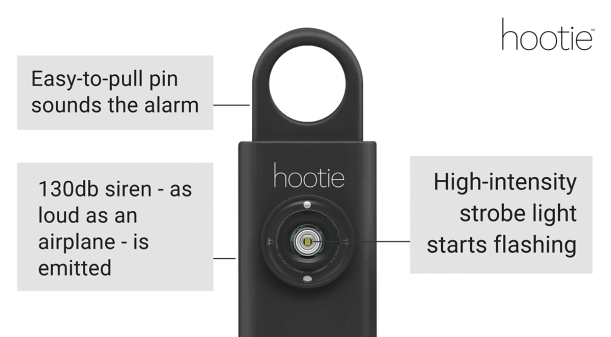
At the pull of its pin, Hootie triggers a built-in strobe light alongside a 130-decibel siren - a level the brand describes as comparable to standing near a jet engine, loud enough to be genuinely startling and, per the brand's own description, noticeable even through a closed door. That's the point: it's meant to startle whoever's nearby and draw outside attention fast enough to give you room to get away or get help.
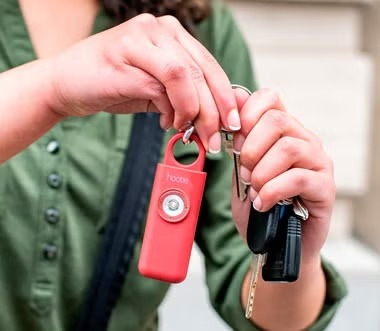
It clips onto a keyring, bag, or belt loop with a built-in carabiner-style loop, comes in five colors, and runs on a replaceable battery the brand rates to last up to a year - so it's ready on day 400 the same way it was on day one.
#1 - The Walk From Your Car To Your Front Door
It's the most repeated moment on this list for a reason: dark driveway, fumbling for keys, a few seconds where you're alone and exposed before you're inside. Most advice for this exact moment is "stay aware" - true, but it's not a plan, it's a mindset.
A pull-pin alarm gives you an actual action to take in that window: one pull triggers a 130-decibel siren and a strobe light, loud enough to be genuinely disorienting and impossible to mistake for a phone going off.

It's not just the walk from the car, either - the same alarm rides along on evening runs, dog walks, and the short walk from a night class to a parking garage, since it's already clipped to the keys you're carrying anyway.
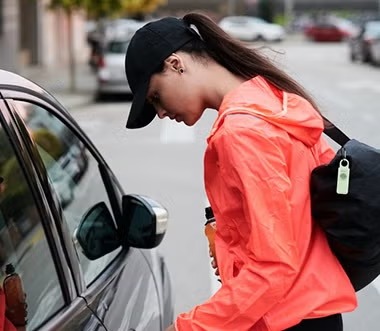
Without something like this clipped to your keys, your plan for that walk is hoping nothing happens - not because you haven't thought about it, but because you haven't had anything to actually do about it.
That walk from the car doesn't have to be one you just hope goes fine.
Get Your Backup Plan#2 - Meeting Someone You Only Know From An App
You've told a friend where you'll be. You've picked a public place. You've done everything the safety articles tell you to do - and you're still walking in to meet a stranger, which is exactly why so many people keep their phone in hand the entire time, just in case.
That's the gap a pull-pin alarm closes: it doesn't need your phone unlocked, an app open, or your hands free to type. It's already on your keys or your bag, ready before you've even sat down.
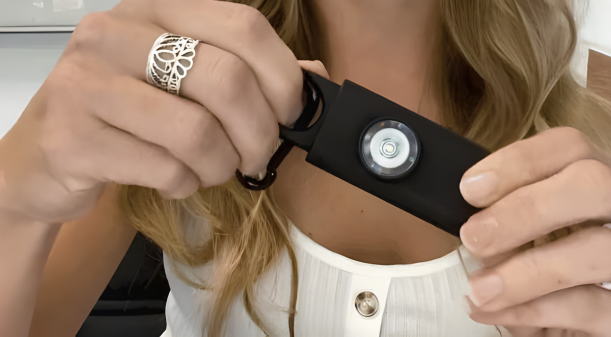
It doesn't ask you to change anything about how you already get ready to leave the house - it's on the same keys or bag strap you're already grabbing on your way out the door.
Without it, your entire backup plan is a phone screen you're hoping you'll have time to reach.
#3 - The Walk Back From The Library After Dark
College campuses look different at 11pm than they do at 11am - fewer people, longer stretches between streetlights, and a walk home that suddenly feels a lot longer than it did in daylight.
Hootie is TSA-approved, so it's the same device that travels through airport security with a student going home for break as it is clipped to a backpack on the walk from the library - no separate rules to remember, no chemical restrictions to check.
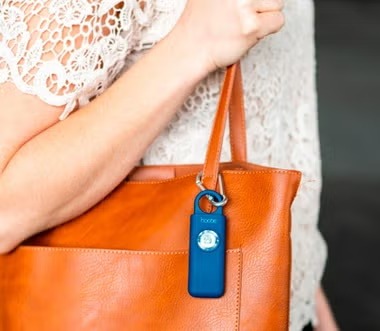
Clipped to a backpack zipper or tote strap, it's not something you have to remember separately from your books or your laptop - it's already moving with you.
Without it, that walk is just distance and hope that it stays uneventful.
You shouldn't have to talk yourself into feeling okay on your own campus.
See Hootie's Price#4 - Waiting Alone For A Ride That's Running Late
The app says four minutes. It's been eleven. You're standing on a curb, alone, watching your phone battery tick down while you keep refreshing a map that isn't updating fast enough.
The battery is the actual failure point most people don't plan for - and it's the one thing a pull-pin alarm sidesteps entirely, since the brand rates its replaceable battery to last up to a year. It doesn't care how long the wait runs or how much charge your phone has left.
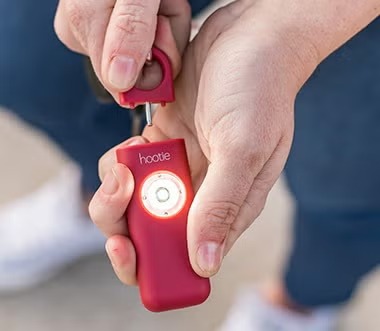
The strobe light matters here specifically - on a dim curb, a flashing light is something a passing car or a doorman half a block away can actually notice, even before the siren registers.
Without it, your plan for that wait is a battery percentage you don't control.
#5 - A Hallway In A City You Don't Know
Traveling alone means every hallway, parking structure, and unfamiliar street is one you're navigating without the local knowledge - or the local support - you'd have at home.
Because it's TSA-approved, it's already in the bag that made it through security with you - unlike pepper spray, which TSA restricts from carry-on bags entirely. It's one less thing to have to plan around before a trip.
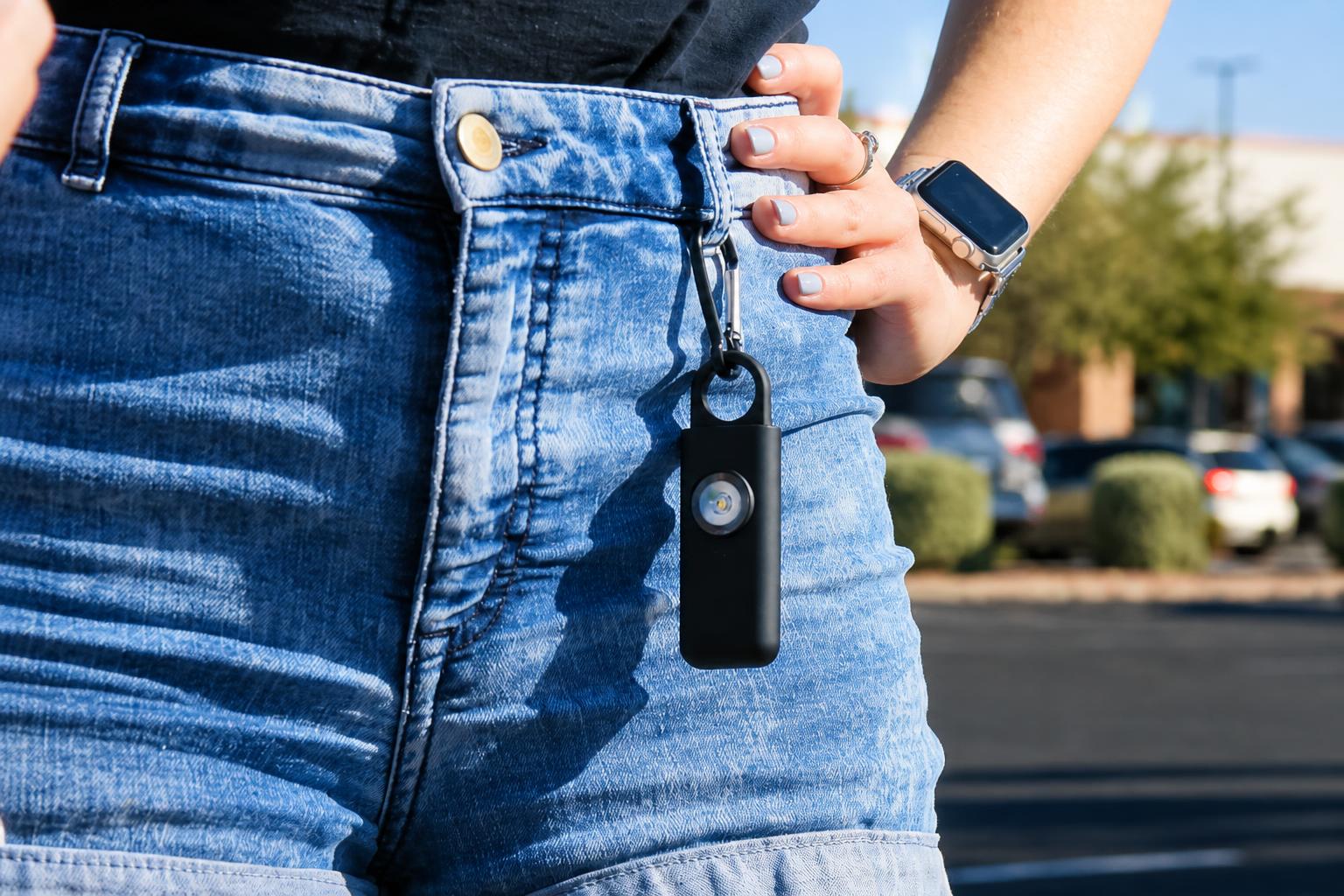
It also means one carry method works whether you're in a hotel hallway, walking a new city block, or clipped to a daypack on a hike - the belt-loop carabiner adapts to whatever you're already wearing that day.
Without it, you're relying on a destination you don't know yet to just work out.
A new city shouldn't mean a new level of exposed.
Check Current PriceHow It Works, Start To Finish
All five moments above rely on the same mechanism, and it's worth spelling out exactly what happens when you pull the pin.
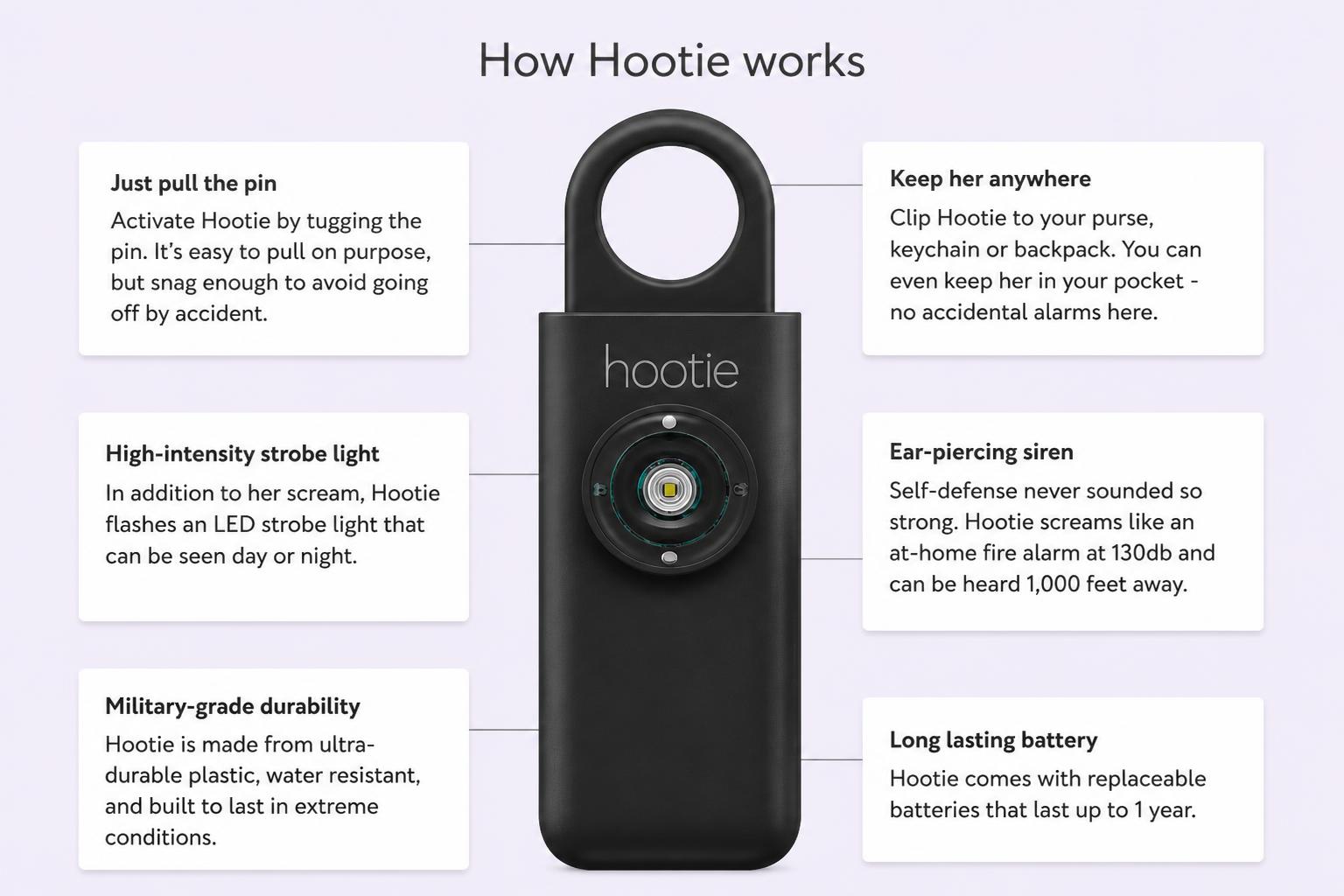
Hootie is built from what the brand describes as durable ABS plastic, engineered to resist impact, rust, and water, with a keychain clip, a replaceable battery rated to last up to a year, and the pull-pin itself sitting at the top. Pulling that pin - about two pounds of force, according to the brand's spec - immediately triggers the 130-decibel siren and the strobe light together. There's no separate switch to flip and no second step.
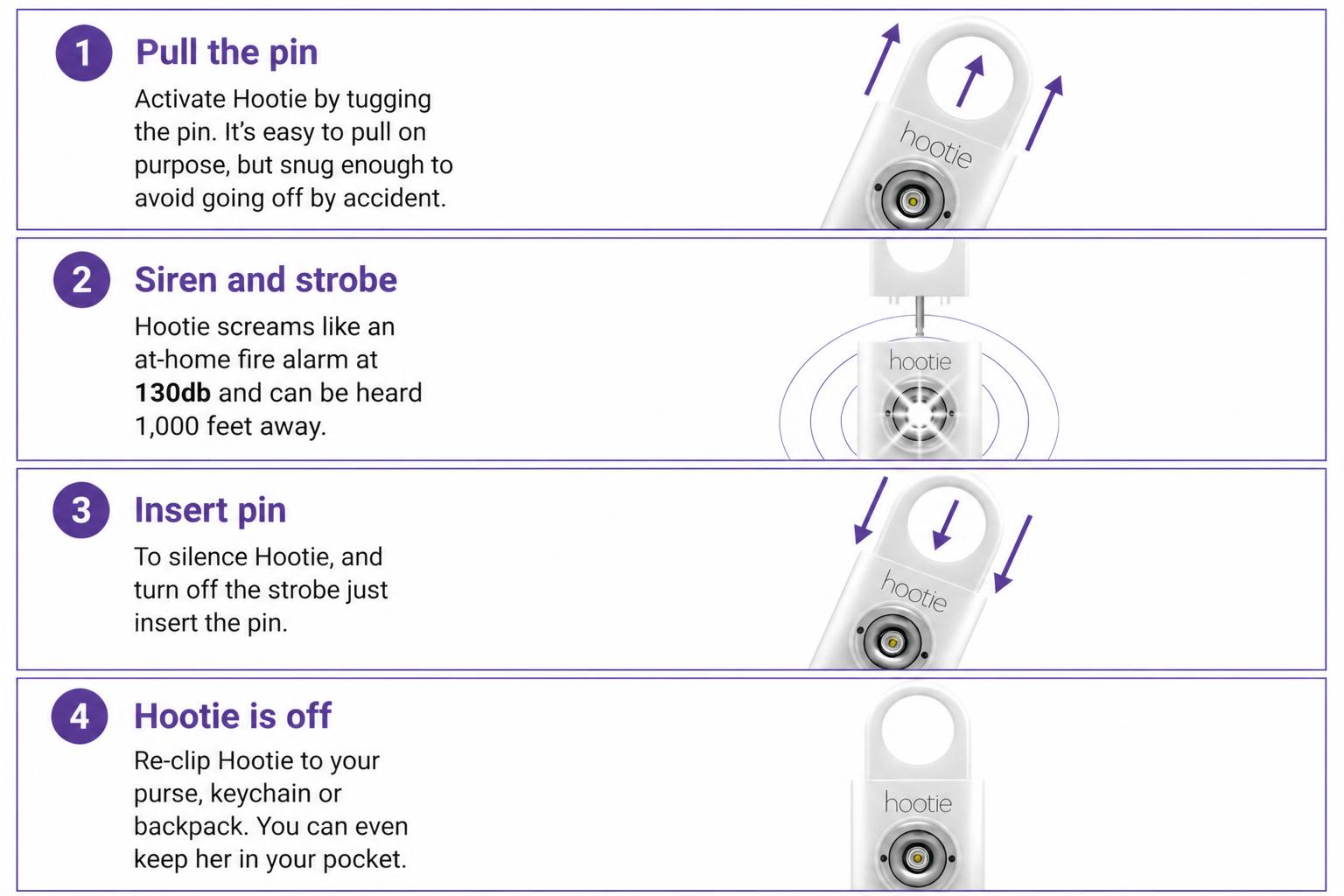
From there, the sequence is simple: pull, alert the people around you, deter whoever's nearby, and create the opening to get away or get help. It's the same four steps whether you're standing in a parking lot or a hotel hallway.
However You Carry It
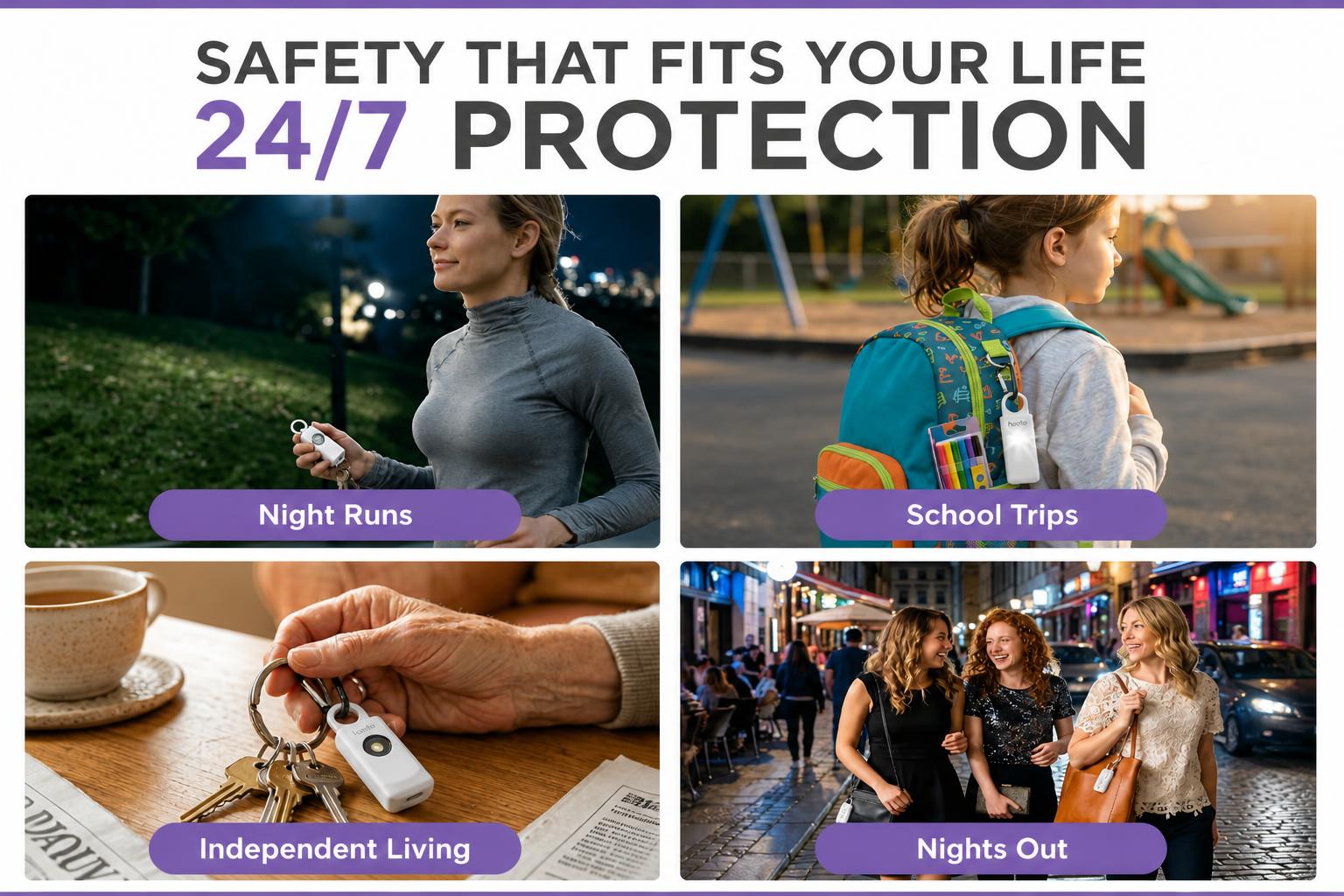
Part of why it shows up in so many different moments above is that it doesn't ask you to carry it any particular way. It comes in five colors and clips onto a keyring, a fanny pack strap, a purse, or a belt loop with the same built-in carabiner-style loop.
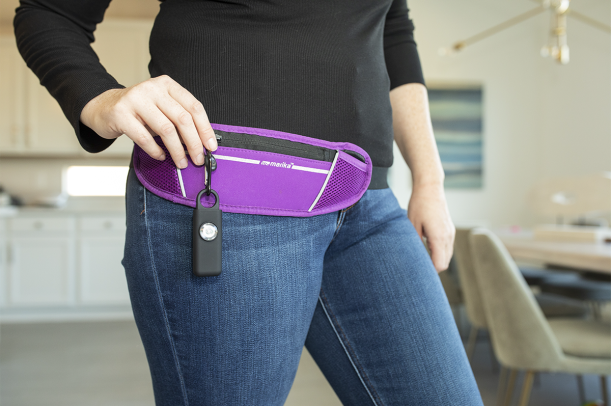
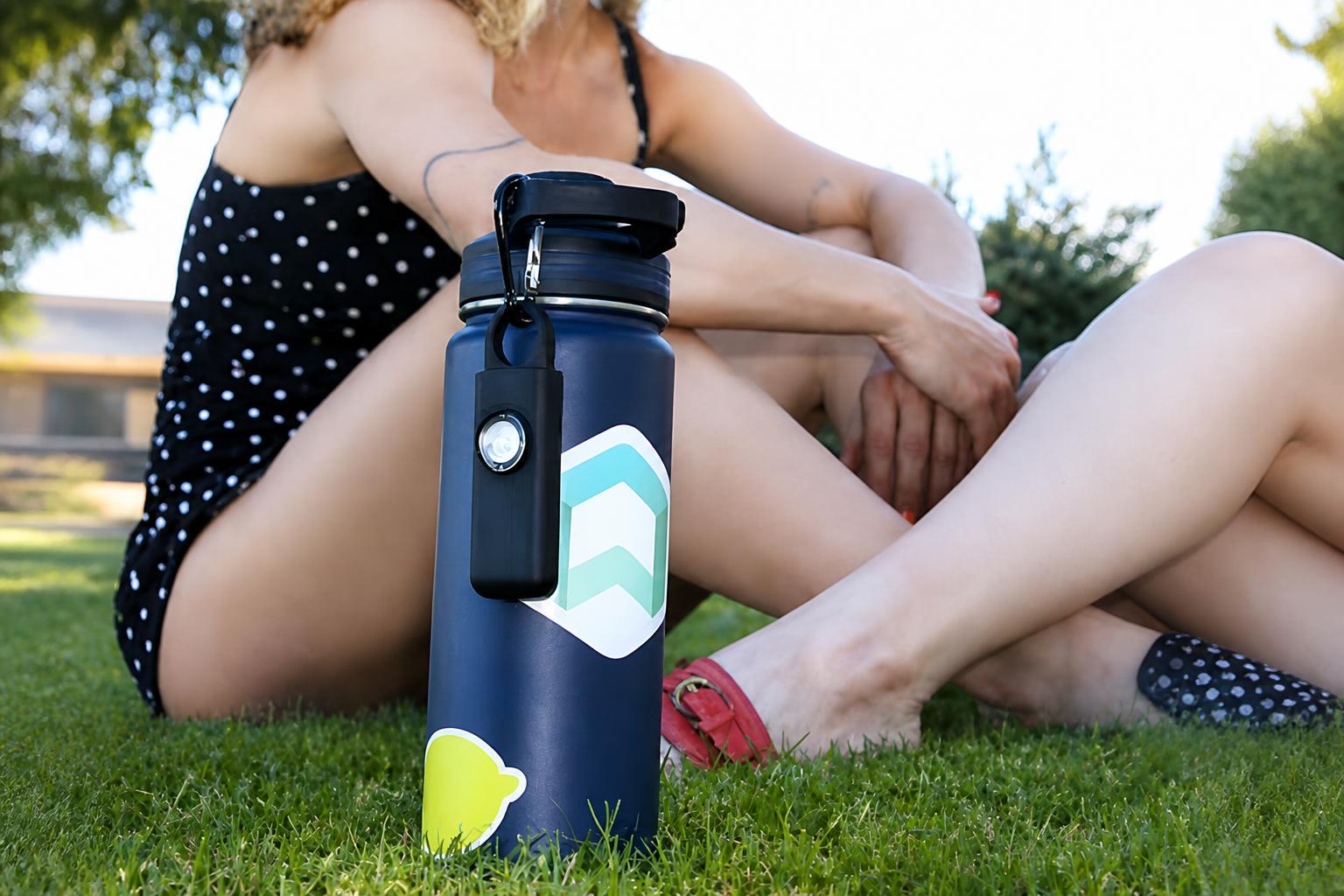
However you're already carrying your keys or your bag, that's how you end up carrying this too - which is most of the reason it's actually still on you in the moment it matters, instead of left behind in a drawer.
It doesn't stop mattering once you're actually out, either - a night out with friends still means a walk to the car, a solo trip to the restroom, or a moment split off from the group, and the same alarm that clips to your keys at home clips just as easily to whatever you're carrying that night.

The plan doesn't change depending on who you're with - it's on you whether you're walking alone or splitting off from a group for five minutes.
However you carry your keys, this is one more thing that's just already there.
Get Hootie TodayHootie vs. Pepper Spray And Mace
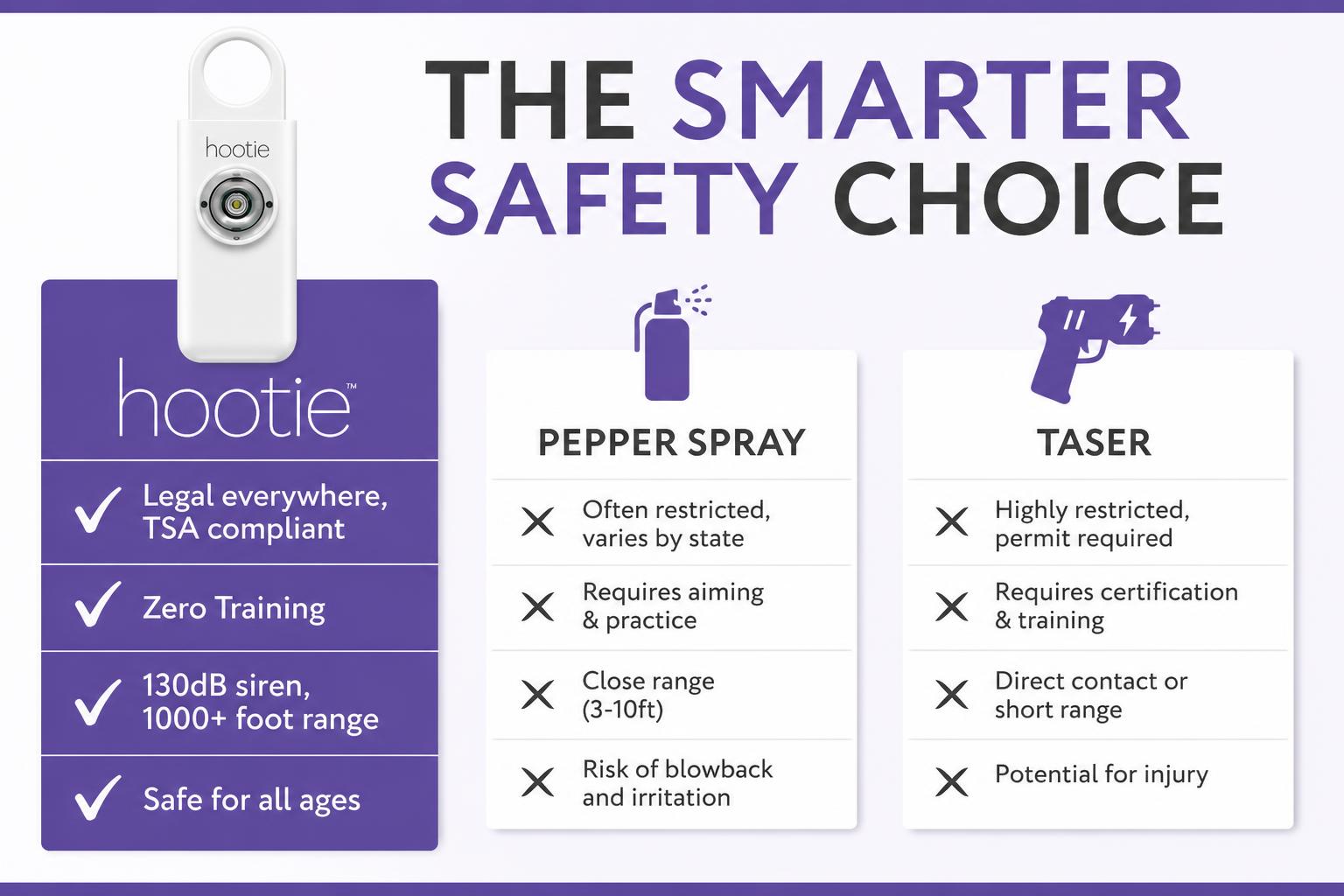
The most common alternative most people already own is pepper spray, so it's worth being direct about how the two compare. Pepper spray requires aim and close range, and its legal status varies by state; TSA restricts it from carry-on luggage entirely. Hootie doesn't require aiming at anything, isn't a restricted item at TSA checkpoints, and doesn't require any training to use - the entire mechanism is a single pull.
Why Hootie Stands Out
The five moments above don't have much in common except one thing: in each one, the usual backup plan - a phone, an app, aimed spray - is asking a lot of a very short window of time. Hootie's whole design is built around removing that requirement. One pull is the entire action, whether your phone is charged or not, whether your hands are steady or not.
See Current Price⏳ Hootie's offer page doesn't display bundle pricing directly - the brand states shipping is free on qualifying U.S. orders, with exact pricing shown once you reach checkout.
The Bottom Line
None of the five moments above are things you can plan away completely - that's not what Hootie claims to do. What it changes is what you're carrying into each one: instead of hoping nothing happens, you're holding something louder than hope, ready with a single pull.